Why Trump Renamed AI to 'Super Intelligence'
President Trump's super intelligence executive order replaces "artificial intelligence" with "super intelligence" across the US federal government. Here is what it actually does, what it does not do, and why experts are uneasy.
On September 29, 2026, President Donald Trump signed Executive Order 14434, titled "Inaugurating the Era of Super Intelligence." The order tells every executive department and agency to stop using the words "artificial intelligence" and "AI" in their official work, and to use "Super Intelligence" and "SI" instead. A week later, the Justice Department put the order into action in a memo that even covers court filings. Elon Musk is already playing along, renaming his AI arm SpaceXAI to SpaceXSI.
It sounds like a cosmetic change. But words shape how people think about technology, and this one is landing right in the middle of a heated debate about AI safety, jobs, and regulation. Let us break it down in plain language.
What Happened: The Super Intelligence Executive Order
The rename idea started on September 22, when Trump told the United Nations General Assembly that US government documents would swap "artificial" for "super." A week later, on September 29, the executive order made it official policy for the executive branch.
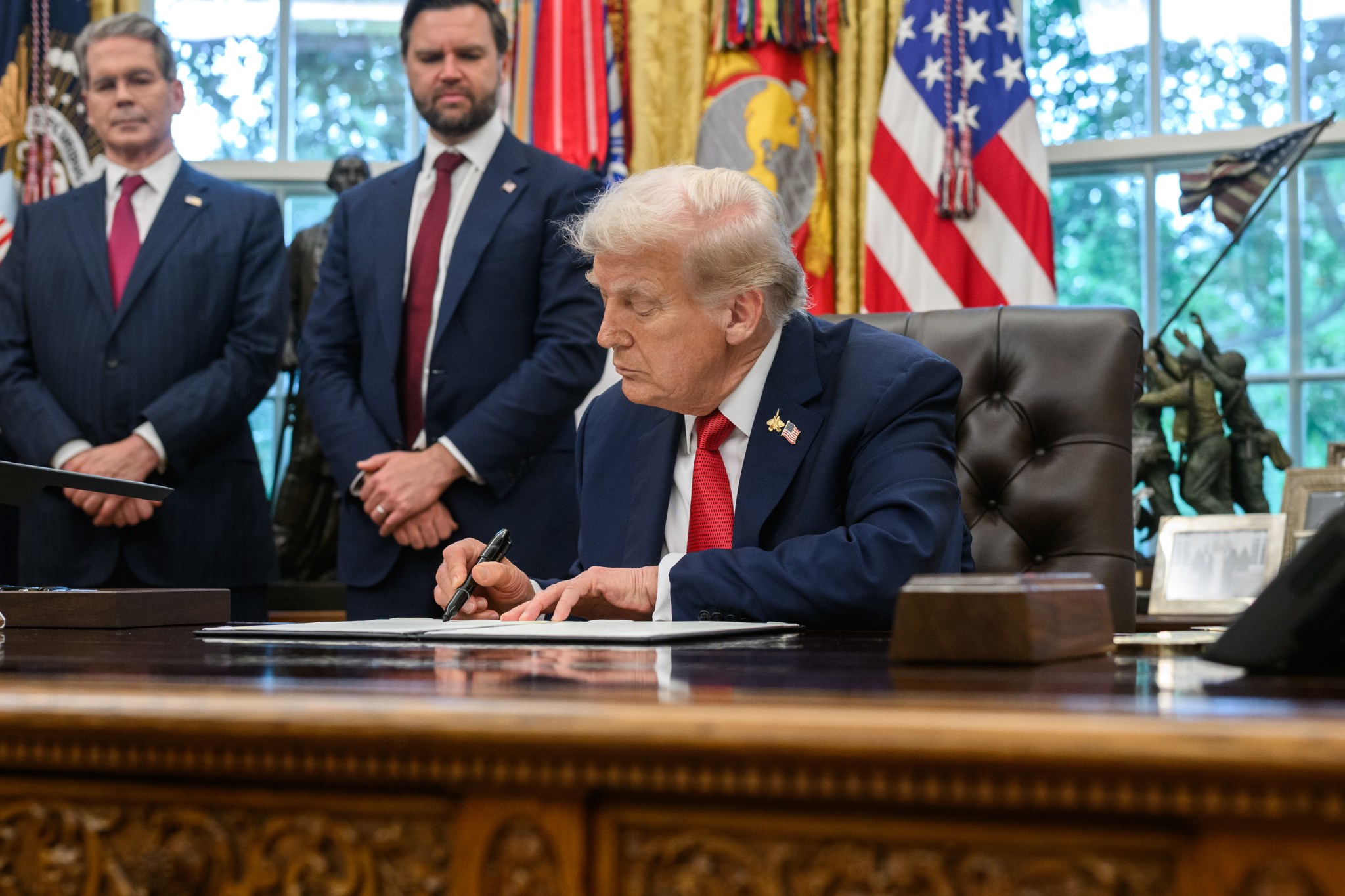
Image: The White House
Then came the follow-through. On October 5, Elon Musk confirmed on X that his company's AI division, SpaceXAI, will become SpaceXSI. On October 6, acting Deputy Attorney General Trent McCotter sent a memo to Justice Department staff directing them to use "super intelligence" and "SI" "to the maximum extent permitted by law" in public communications, policy documents, and official records, including court filings when appropriate, according to a memo seen by Reuters.
What the Order Actually Says
Executive Order 14434 is narrower than the headlines suggest. Here is what it covers:
- Where it applies: Official correspondence, public communications, websites, reports, policy documents, and other non-statutory documents of federal agencies.
- Where it does not apply: Existing laws, regulations, contracts, and grants are untouched. Private companies are not directed to rename anything.
- What "super intelligence" legally means: For the purposes of the order, "Super Intelligence" simply means the technologies already covered by the existing statutory definition of "artificial intelligence" in US law. The capabilities have not changed; only the label has.
- Next step: The order directs the president's science and technology adviser to propose a formal federal definition of "Super Intelligence" within 60 days, which runs to late November 2026.
A White House fact sheet says the order exists to recognize "the continuously advancing technological frontier and the limitless promise it offers the American people." Trump himself put it more simply, arguing the change reflects the "promise, potential, and rapidly advancing capabilities" of the technology.
Why Does Trump Want the Rename?
The stated reason is about branding. Trump has argued that the word "artificial" makes the technology sound fake, when in his view it is anything but. A friendlier, more powerful-sounding name changes the mood around the technology.
There is also political context. Public perception of AI has soured in the wake of hacking incidents and safety scares, according to Reuters. The country has seen protests over data centers, anxiety about job displacement, and growing distrust of big tech. Reporting in The Week notes that advisers have warned that public distrust of AI could hurt Republicans in the midterm elections. A technology voters fear is getting a friendlier name.
Trump floated the idea for about a week before signing the order, and US diplomats were already instructed to make the change in official correspondence. Even China's foreign ministry acknowledged the new terminology, signaling it would respect the policy update.
Why "Superintelligence" Is a Loaded Word
Here is the part that has researchers worried: "superintelligence" is not an empty label. The term has been in use since 1822 for intelligence greater than humanity's. In 2014, philosopher Nick Bostrom defined it as an intellect that greatly exceeds human cognitive performance in virtually all domains, and that definition now anchors the most serious AI safety arguments. In September 2026, more than 850 researchers and public figures, including AI pioneers Yoshua Bengio and Nobel laureate Geoffrey Hinton, signed a report calling for a halt to superintelligence development until it can be shown to be controllable.
The White House order erases that distinction. Under the new terminology, today's chatbots and a hypothetical machine mind smarter than humans all fall under one label, which could make it harder for the public to tell the difference between the AI tools they use today and the speculative systems safety researchers are warning about.
What Is Already Changing in Practice
- The Justice Department: The October 6 memo makes the rename real inside federal law enforcement, extending even to court filings.
- Elon Musk's companies: SpaceXAI is becoming SpaceXSI. Musk confirmed it with a reply on X: "Yes, we will make that change," adding, "No more AI. SI, it's better."
- US diplomats: State Department staff were instructed to change the term in documents and positions, according to emails obtained by the Associated Press.
- Foreign governments: China has acknowledged the terminology change and signaled respect for the update.

Image: Gage Skidmore via Wikimedia Commons (CC BY-SA 3.0)
What Does This Mean for You?
For now, the practical impact on everyday users is close to zero, but there are a few things worth knowing:
- Your apps are not changing. The order does not tell private companies to rename products, so ChatGPT, Claude, Gemini, and Grok keep their names and their "AI" branding.
- Government documents will read differently. Federal websites, reports, and court filings will increasingly say "super intelligence" or "SI." Expect confusion in the transition, especially where legal definitions matter.
- It is part of a bigger push. The rename sits alongside a voluntary White House Accord on Super Intelligence signed by major tech firms, which Trump described as "morally binding." Watch for the formal federal definition of "Super Intelligence," due for proposal in late November.
- Terminology shapes debate. Calling the technology "super" instead of "artificial" frames it as powerful and inevitable rather than synthetic and limited. That framing could influence how the public, and lawmakers, think about regulation.
Key Takeaways
- Trump's Executive Order 14434 renames "artificial intelligence" to "super intelligence" across US federal agencies, effective now.
- The Justice Department has already enforced it internally, including in court filings, and Musk renamed SpaceXAI to SpaceXSI.
- Nothing changes for consumers or private companies: the order only governs official federal documents.
- The word "superintelligence" already has a specific meaning in AI safety research, and experts worry the rename blurs the line between today's tools and far more powerful future systems.
- A formal legal definition of "Super Intelligence" is due in late November 2026, which could determine how much of the industry falls under future oversight.
For more AI news and policy updates, keep following Top Tech Today, and check our Technology section for explainers on the tools shaping your world.
Sources: Reuters, The Hindu, The Week, TechX Media, Reporter World News (ANI)
Discussion
// Sign in with Google to join the discussion (Settings → Comments to change who can comment)