Google Antigravity Adds Claude 5.5 for Paid Users Only
Google just added Anthropic's Claude Opus 5.5 and Sonnet 5.5 to Google Antigravity — but only paid Pro and Ultra subscribers can use them. If you're on a free plan, the door is closing.
On October 3, 2026, Google updated its agentic coding platform Antigravity with direct access to Anthropic's newest frontier models. Developers no longer need a separate Anthropic API key — the models run on their Google AI plan quota. But Google drew a hard line: free accounts, trial users, Google AI Plus members, and even Enterprise accounts are locked out of the new Claude models. And on November 2, 2026, older models leave the platform for good.
Here's everything developers need to know about the Google Antigravity Claude shake-up — and what to do before the deadline. For more AI news, check our AI section.
What Is Google Antigravity?
If you haven't tried it yet, Antigravity is Google's agent-first development platform — think of it as mission control for AI coding agents. Instead of just autocompleting lines of code, Antigravity's agents plan, write, and test software across entire repositories, working autonomously in the background while you steer them.
Google released Antigravity 2.0 at Google I/O 2026 in May, with desktop apps for macOS, Windows, and Linux. This week, ahead of the new Googlebook laptop launch, Google also put Antigravity on the Play Store with a native Android interface — though it only runs on Googlebook hardware, not your phone.
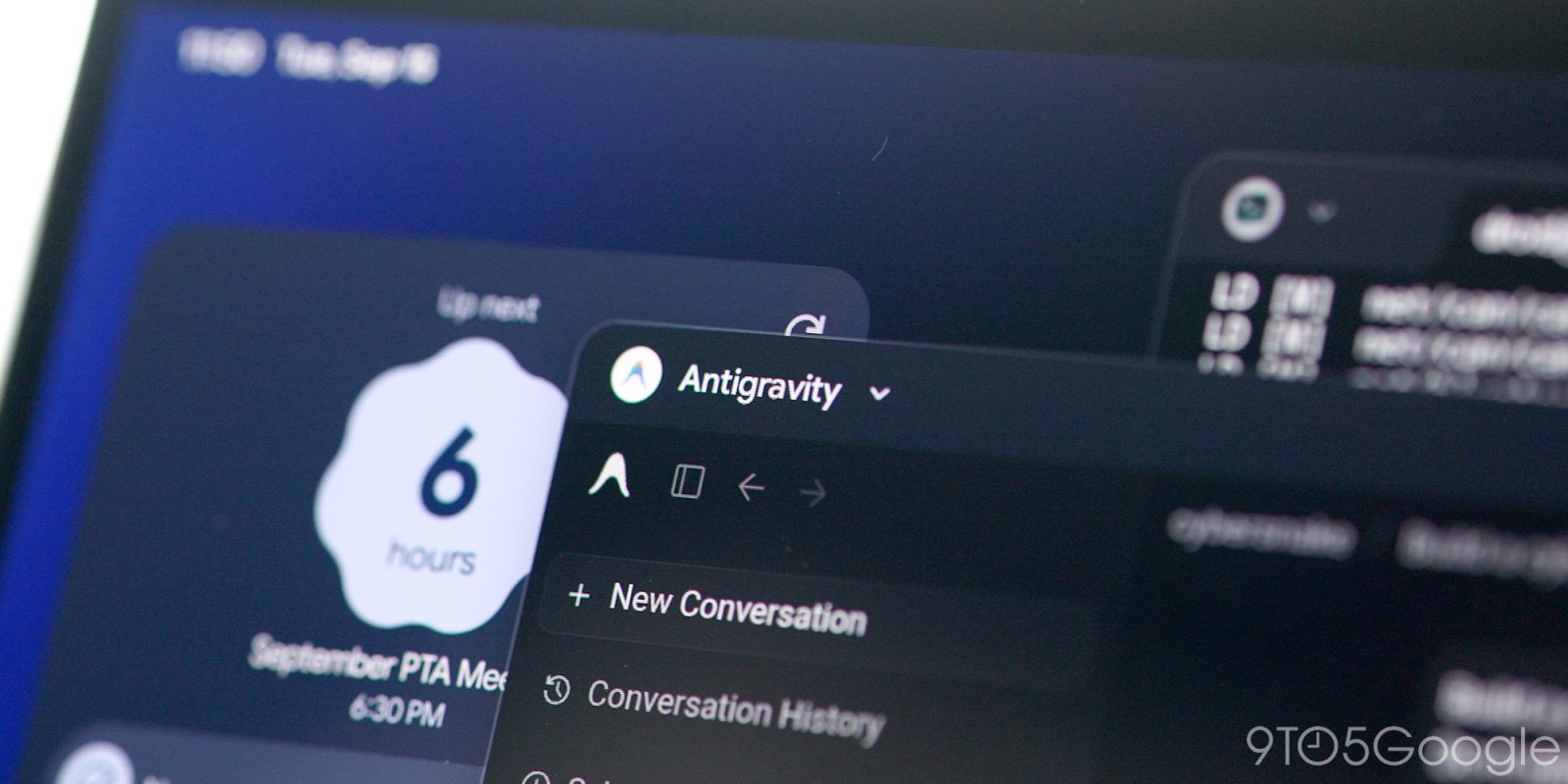
Image: Google
Claude 5.5 Arrives in Google Antigravity

The October 3 update adds two new reasoning models to Antigravity's model selector: Claude Sonnet 5.5 (thinking) and Claude Opus 5.5 (thinking). Both are Anthropic's latest generation, tuned for software engineering work.
Here's how the two compare, based on published benchmark data:
- Claude Sonnet 5.5 is the daily workhorse. It scored 70.6 on Terminal Bench 4.0, runs about 30 percent faster than its predecessor, and uses fewer tokens per task — which means it burns through your quota more slowly. For routine coding, refactoring, and debugging, this is the one most developers will reach for.
- Claude Opus 5.5 is the heavy thinker. It scored 66.4 on the same benchmark but is built for long-horizon planning, multi-step debugging sessions, and deep reasoning across entire codebases. Complex agentic queries draw substantial compute, so you'll want to watch your quota on long runs.
One nice simplification: you don't need an Anthropic API key at all. Both models operate directly through your Google AI plan quota inside Antigravity — no separate billing, no extra setup.
Who Gets Access — and Who's Locked Out
This is where it gets strict. According to Antigravity's model documentation, the new Claude 5.5 models are available only to Google AI Pro (non-trial, paid subscriptions) and Google AI Ultra members. Google AI Pro costs $19.99 per month in the US.
Everyone else is excluded:
- Free accounts — no Claude 5.5 access
- Google AI Plus ($9.99/month tier) — no access
- Trial or promotional Pro subscriptions — no access
- Enterprise accounts — no access
Meanwhile, Google's own models stay widely available: Gemini 3.8 Flash, Gemini 3.7 Flash, Gemini 3.6 Flash, and Gemini 3.1 Pro are listed across all plan tiers, free included.
And there's a deadline. On November 2, 2026, Google will retire Claude Opus 4.6, Claude Sonnet 4.6, and the open-weights model GPT-OSS-120B from Antigravity. After that date, third-party model access disappears from free and lower-tier plans entirely — free users will be limited to Google's first-party Gemini models. Also note: Antigravity doesn't support bringing your own Anthropic API key, so there's no workaround inside the IDE.
What Developers Should Do Before November 2

If Claude models are part of your daily workflow in Antigravity, don't wait until November. Here's a practical checklist:
- Audit your account tier. Open Antigravity's settings and confirm whether you're on a paid, non-trial Pro or Ultra plan. Promotional bundles and carrier deals don't count.
- Check hardcoded model names. If your scripts, CI/CD pipelines, or agent configs reference claude-opus-4.6, claude-sonnet-4.6, or gpt-oss-120b, update them before they break on November 2.
- Test Gemini 3.8 Flash now. Run a sprint with Google's native model as your primary engine to see if your prompts and workflows transfer cleanly — it's free and very fast.
- Decide your path. Upgrade to Google AI Pro before November 2 if Claude is non-negotiable, or commit to the Gemini workflow. Either way, decide deliberately, not on deadline day.
One more technical note from the documentation: your reasoning-model selection persists within a conversation — switching models while an agent is mid-run won't change the model for that active turn.
More Google Moves This Week
The Claude news isn't the only thing happening in Google's world:
- Antigravity Agent migration deadline — October 5. The managed Antigravity agent in the Gemini API has a new version, antigravity-preview-09-2026 (released September 17), which replaces antigravity-preview-05-2026. The old agent string shuts down on October 5 — tomorrow — so update your API calls if you haven't.
- Antigravity hits the Play Store. As mentioned above, there's now a native Android version of Antigravity (package com.google.android.apps.antigravity) — but it only works on Googlebook OS laptops, not phones. Sideloading it on a Pixel phone reportedly fails during terminal setup.
- New federated learning system for Gboard. On October 4, Google announced a new privacy-preserving federated learning framework with Trusted Execution Environments, released open-source under Apache 2.0. It lets Gboard learn from your typing patterns while keeping your data encrypted on-device.
For more tech news like this, follow Top Tech Today — a new story drops every few hours.
Sources: PC-Tablet, Let's Data Science, 9to5Google, Digital Matters, Wisevoter
Discussion
// Sign in with Google to join the discussion (Settings → Comments to change who can comment)