ASUS Ascent GX10 64GB: A Supercomputer on Your Desk
The ASUS Ascent GX10 64GB packs NVIDIA's GB10 Grace Blackwell chip and up to 1 petaflop of AI performance into a box about the size of a lunchbox. It is built for one job: letting you build and run autonomous AI agents entirely on your own desk, without depending on the cloud.
ASUS announced the new configuration on October 2, 2026 in Taiwan, publishing the full press release on October 5. It joins the existing 128GB Ascent GX10 as a lower-cost entry point into the same NVIDIA DGX Spark platform. Here is what the machine is, what it can actually do, and who it is for.

Image: ASUS
What Is the ASUS Ascent GX10 64GB?
The Ascent GX10 is a compact desktop AI supercomputer. It is not a gaming PC or a typical mini PC: it ships with NVIDIA DGX OS and the full NVIDIA AI software stack, including PyTorch, Jupyter, and Ollama, so developers can prototype, fine-tune, and run AI models the moment they plug it in.
The 64GB version targets developers, researchers, and data scientists who want to work with efficient open-source models in the 30 to 35 billion parameter class. ASUS highlights Qwen3.8-27B as an example of a modern open model that fits comfortably in this machine. ASUS also notes the 64GB configuration can run reasoning models of up to 100 billion parameters, with frontier-scale setups possible when systems are combined.
Two security-minded additions come preloaded: NVIDIA OpenShell and NVIDIA NemoClaw, which add policy-based guardrails around how agents behave and handle data. There is also SSH-based remote management, so IT teams can provision and monitor fleets of these boxes alongside existing infrastructure.
A Supercomputer Chip Under the Hood
The engine inside is NVIDIA's GB10 Grace Blackwell Superchip. It combines a Blackwell GPU with fifth-generation Tensor Cores and FP4 support with a 20-core NVIDIA Grace Arm CPU. The two are linked by NVIDIA's NVLink-C2C interconnect, which ASUS says delivers five times the bandwidth of PCIe Gen 5. Together they push up to 1 petaflop of FP4 AI performance (with sparsity) while drawing power from a standard wall socket.
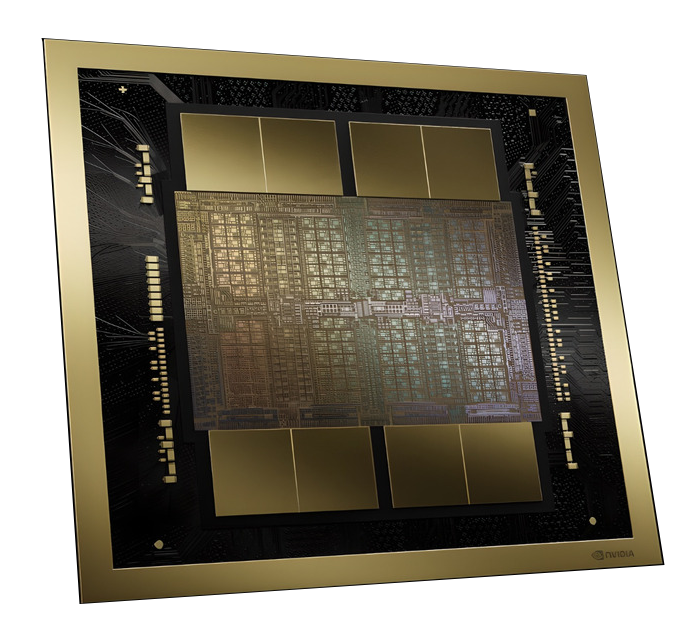
Image: ASUS
There is one design detail worth understanding: unified memory. A normal computer keeps system RAM and graphics memory in separate pools. The GX10 pools 64GB of LPDDR5X memory (273GB/s of bandwidth) into a single space the CPU and GPU share. For AI work this matters, because large models do not have to be shuttled back and forth between memory pools, which removes a common bottleneck.
Why Run AI Agents on Your Own Desk?
The pitch is simple. AI agents have changed how people use AI: instead of asking questions, you hand the agent a job and it plans, uses tools, and carries out multi-step work on its own. Those agents run constantly, and cloud inference bills grow with every token. ASUS argues a local box gives you cost predictability: run capable agents 24/7 without paying per token.
The second argument is privacy and data sovereignty. Keeping models, prompts, and inference on-device means confidential business data and intellectual property never have to travel through a public API. For teams handling sensitive code or documents, that alone can justify the hardware.

Image: ASUS
ASUS even builds the GX10 around agentic workflows: it works with open frameworks like OpenClaw and ships NemoClaw guardrails so agents can act autonomously within rules you set. It is a machine designed less for chatting and more for doing, for example an agent that watches your codebase, reviews pull requests, or re-runs analyses while you are asleep.
Start Small, Scale by Stacking
The clever part of the 64GB story is the upgrade path. Each unit has built-in NVIDIA ConnectX-7 networking, and two 64GB systems can be clustered into a single pool of 128GB of unified memory with up to 2 petaflops of AI compute and up to 546GB/s of combined memory bandwidth. ASUS says the two-unit setup delivers up to 1.7x the performance of a single 128GB system in NVIDIA's own test on the Qwen 3.8 27B model, and it can run compressed versions of even larger models, such as Qwen3.8-Flash-Next, via NVIDIA's NVFP4 format.

Image: ASUS
Clustering used to mean manual network tuning. NVIDIA's Sync Cluster Assistant automates the setup, detecting connected units, validating configuration, and wiring up the network without changing your software environment. In practice, the workflow is: start with one box for prototyping, add a second as your models and context windows grow.
Price and Availability
NVIDIA says the 64GB configuration of the DGX Spark platform will be available starting October 23, 2026 through partners including Acer, ASUS, Dell, Gigabyte, HP, and MSI, with systems starting at $4,999. ASUS has announced the 64GB Ascent GX10 configuration but has not yet shared its own pricing or retail availability date, so interested buyers will need to wait for ASUS or its regional partners to confirm.
Who is this for? If you run ChatGPT for casual questions, it is not for you. If you are a developer, researcher, or data scientist who wants local, always-on AI agents with predictable costs and your data staying home, the 64GB Ascent GX10 is the cheapest ticket into NVIDIA's desktop supercomputer platform yet. For the largest local models and the most demanding workloads, the 128GB model remains the flagship. For more on the trend, see our AI coverage and Technology section.
Sources: GadgetBond, ASUS press release, ASUS product page, TechnologyHQ
Discussion
// Sign in with Google to join the discussion (Settings → Comments to change who can comment)